Small Shot, Long Tab: What Prague's Espresso-and-Linger Model Is Teaching American Café Owners About Real Revenue
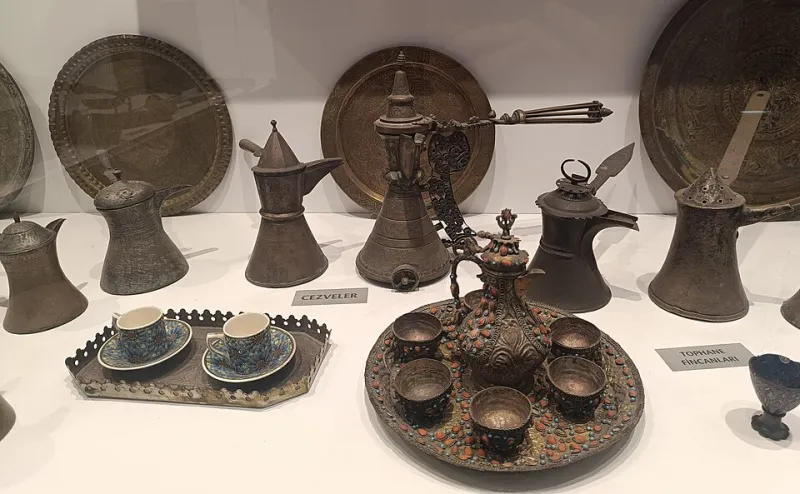
Photo: Julvsel, CC BY-SA 4.0, via Wikimedia Commons
Walk into almost any busy American coffee shop on a Tuesday morning and you'll see the same choreography: a line out the door, a barista calling names, a customer grabbing a 20-ounce cup without breaking stride. The whole transaction takes maybe four minutes. That's the model most US cafés have optimized for — fast, scalable, repeatable.
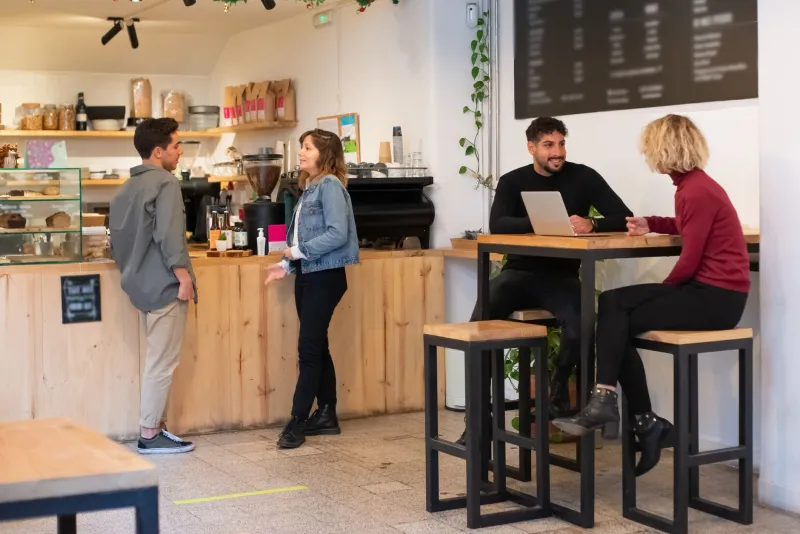
Now walk into a traditional Prague coffeehouse. The espresso arrives in a demitasse. There's a small glass of sparkling water on the side. The person who ordered it forty minutes ago is still there, mid-conversation, maybe on their second round. Nobody's rushing them. Nobody's wiping down the table next to them as a hint.
These two scenes represent genuinely different philosophies about what a coffee shop is for. And increasingly, American café owners are asking a harder question: which one actually makes more money?
The Volume Trap
The quick-turnover model isn't wrong, exactly. High throughput works — especially for drive-throughs, campus locations, and commuter corridors where people genuinely don't want to sit down. But for independent specialty cafés competing with Starbucks on convenience and losing, the race-to-the-door strategy starts to feel like a losing game.
Labor costs are up. Rent in desirable urban neighborhoods hasn't budged. And customers who want fast have plenty of options that aren't a 400-square-foot indie shop with a $6 latte.
What those customers can't get at a chain is a reason to stay.
That's the gap Prague's coffeehouse tradition has quietly filled for decades — and it's the gap a new wave of American specialty cafés is starting to exploit.
What the Prague Model Actually Looks Like
In Czech coffee culture, the espresso isn't a delivery vehicle for caffeine. It's an occasion. Shots are smaller and more concentrated, typically served with water to cleanse the palate, and the expectation on both sides of the counter is that the customer will be there for a while. Cafés are designed around this — comfortable seating, acoustics that support conversation, table spacing that signals privacy rather than packing.
The result is a lower per-transaction volume but a meaningfully different revenue profile. Customers who stay tend to order more. A second espresso. A pastry. Maybe a glass of wine in the afternoon. The average spend per visit climbs even as the number of visits per hour drops.
More importantly, those customers come back. Loyalty in Prague's café culture isn't built through punch cards — it's built through the feeling that a specific place belongs to you in some way. That's harder to manufacture and much harder to replicate.
The American Experiment
A handful of US cafés have started testing versions of this model, particularly in cities like Portland, Austin, and Brooklyn where the specialty coffee audience already skews toward intentionality. The adjustments are practical: smaller menus, table minimums during peak hours, a deliberate slowdown in service pacing that signals to customers that there's no rush.
Some owners report initial resistance — Americans are conditioned to feel like lingering is somehow impolite, like they're taking up space that belongs to someone else. Retraining that instinct takes consistent environmental cues. Soft lighting helps. So does the absence of a visible queue. So does the simple act of a barista making eye contact and asking how someone's day is going, without glancing at the next ticket.
The financial results, where owners have shared them, are encouraging. One café in Denver that shifted to a slower service model reported a 22% increase in average ticket size within six months, even as total daily customer count dropped slightly. The math worked because higher-spend visits more than offset the volume loss — and operating costs actually decreased slightly with a less frenetic pace.
The Cultural Friction Point
Here's where it gets complicated. Prague's café culture developed over centuries in a context where public gathering spaces served a social function that American culture has largely outsourced to digital platforms. The coffeehouse was where you argued about politics, fell in love, wrote your novel, avoided your landlord. It had weight.
American cafés are trying to recapture something like that weight, but they're doing it in a culture that still defaults to productivity as the measure of time well spent. Sitting for two hours over an espresso can feel indulgent in a way that's hard to shake.
The cafés that are making this work tend to give customers permission — explicitly or implicitly — to slow down. Some do it through programming: afternoon talks, small performances, curated reading corners. Others do it purely through atmosphere. The message is the same: your time here is not wasted time.
What the Numbers Don't Capture
Beyond revenue, there's something harder to quantify happening in these spaces. Staff turnover tends to be lower in cafés that aren't running a high-stress, high-volume operation. Baristas who have time to talk to customers develop relationships that translate into regulars. Regulars become advocates. Advocates bring friends.
That word-of-mouth loop is exactly how Prague's best coffeehouses have sustained themselves through economic turbulence, political upheaval, and the rise of global chains. They became irreplaceable to the people who loved them.
That's the real lesson American café owners are taking from the Prague paradox. A smaller shot, served slowly, to someone who wants to stay — might just be the most sustainable business model in the room.