Unplugged on Purpose: The American Cafés Pulling the Wi-Fi Plug — and Watching Business Boom
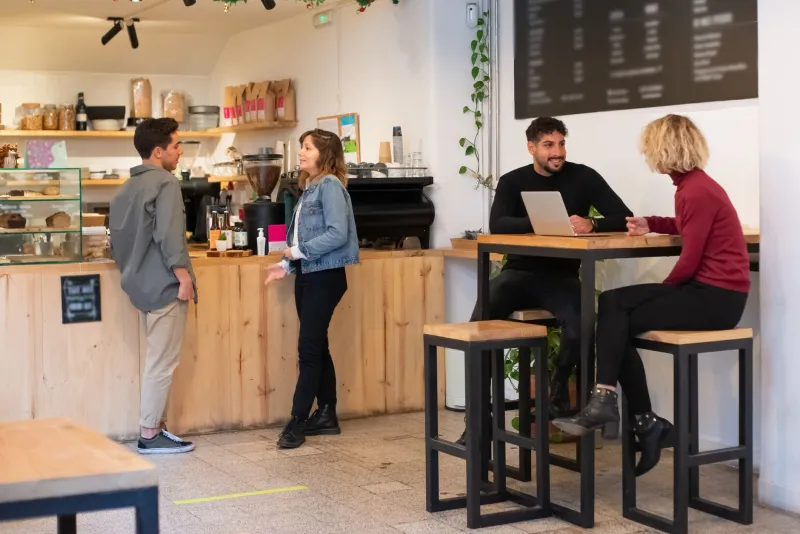
Walk into most American coffee shops on a Tuesday morning and you'll see the same scene: a row of open laptops, noise-canceling headphones clamped over ears, empty cups pushed to the edge of tables that nobody has any intention of giving up. The café has become an annex of the home office, a co-working space that charges rent in flat whites.
Now, a growing number of café owners are quietly pushing back — and they're looking to Prague for their playbook.
The Prague Model That's Crossing the Atlantic
In Prague, the coffeehouse has always been something else entirely. Since the city's grand café era in the late 19th and early 20th centuries — when writers, philosophers, and political dissidents gathered over cups of strong black coffee for hours of spirited conversation — the Czech coffeehouse has functioned as a social institution. You weren't there to work. You were there to be, to talk, to argue, to fall a little bit in love with the person across the table.
That tradition didn't disappear with the internet age. Many of Prague's most beloved specialty cafés today still operate without Wi-Fi, or limit it to a short window after purchase. The expectation is clear: this is a place for people, not pixels.
American café owners who've visited Prague — or who've simply grown frustrated watching their dining rooms turn into silent laptop farms — are taking notes.
What Happens When You Cut the Cord
"I went to Prague for two weeks and couldn't believe the energy inside these cafés," says Marcus Delray, who owns Threshold Coffee in Asheville, North Carolina. "People were leaning across tables, laughing, having actual conversations. I came home and thought, why does my shop feel like a library by comparison?"
Delray pulled the Wi-Fi password from his menu boards eight months ago. He expected complaints. He got some. But he also got something he hadn't anticipated: regulars who started coming in pairs and groups instead of solo. Average ticket sizes went up because people were ordering rounds of drinks to keep the conversation going, not nursing a single cold brew through a four-hour Zoom call.
"My revenue per square foot is up about 18 percent," he says. "And honestly? The vibe is just better. People look at each other now."
Delray's experience isn't an outlier. A 2023 survey conducted by the Specialty Coffee Association found that cafés with restricted or no Wi-Fi reported higher customer satisfaction scores around atmosphere and community feel, even when individual customers initially rated the policy negatively. The data suggests that once people adjust to being offline, they tend to enjoy it.
The Economics of Conversation
There's a real business case hiding inside all this philosophy. Laptop campers — affectionate industry slang for customers who occupy a table for hours on a single drink — are among the least profitable customers a café can have. They block seating during peak hours, consume electricity and bandwidth, and rarely generate the kind of repeat social business that comes from a table of four friends catching up over multiple rounds.
Jenna Park, who co-owns Letterpress Café in Portland, Oregon, put it plainly: "We're not a co-working space. We're not charging for a desk. We're selling coffee and an experience. When I realized we were subsidizing people's remote work for the price of a latte, something felt off."
Park didn't eliminate Wi-Fi entirely. Instead, she adopted what she calls a "Prague-style window" — customers receive a code good for 45 minutes of access with any purchase. After that, they're welcome to stay, but the internet's gone. Tables turn faster during the morning rush. Afternoon foot traffic has increased because there are actually seats available.
Not Everyone's Convinced — And That's Fair
It would be dishonest to pretend this trend is universally popular. Remote workers, freelancers, and students have real needs, and for many of them, the neighborhood café with reliable Wi-Fi is a lifeline — especially in cities where home offices are the size of a closet.
"I understand the philosophy," says Kevin Ramos, a freelance graphic designer in Chicago who frequents cafés to work. "But if a place pulls Wi-Fi, I just go somewhere else. I don't think that makes me the bad guy."
He's not wrong, and café owners who've made the switch acknowledge the trade-off. The move to limit Wi-Fi works best in neighborhoods with strong foot traffic and a built-in social culture — places where the café already functions as a community hub rather than a remote-work refuge.
It also matters enormously how the policy is communicated. Cafés that frame it as a lifestyle choice — something aspirational, even a little romantic — tend to fare better than those that simply post a blunt "no Wi-Fi" sign on the door.
Designing Spaces That Invite Lingering — Without Screens
Some owners are going further than just cutting the password. They're rethinking their physical spaces to encourage the kind of face-to-face sociability that Prague's coffeehouses architect so naturally.
Long communal tables. Sofas arranged in conversational clusters rather than rows facing a wall. Board games on shelves. Local art that gives people something to discuss. Even the simple act of placing chairs at slight angles to each other — rather than the standard side-by-side laptop setup — can shift the energy of a room.
"Prague's cafés are designed for human beings," says Delray. "The furniture invites you to look at another person. American cafés were designed around the laptop. We just never really noticed until we started asking why nobody talked anymore."
The Bigger Picture
This isn't just a café trend. It's a symptom of something a lot of Americans are quietly grappling with: the sense that technology has colonized every last corner of daily life, including the spaces that used to be sanctuaries for slowness and human connection.
Prague's coffeehouse tradition offers a compelling counter-narrative — not because it's anti-technology, but because it's radically pro-human. The cup of coffee is an excuse to gather. The table is a stage for real life.
A growing number of American café owners are betting that their customers are ready to remember what that feels like. Based on the early returns, they might be right.