One Cup, No Rush: How Prague's Art of the Purposeful Coffee Break Is Winning Over Burned-Out Americans
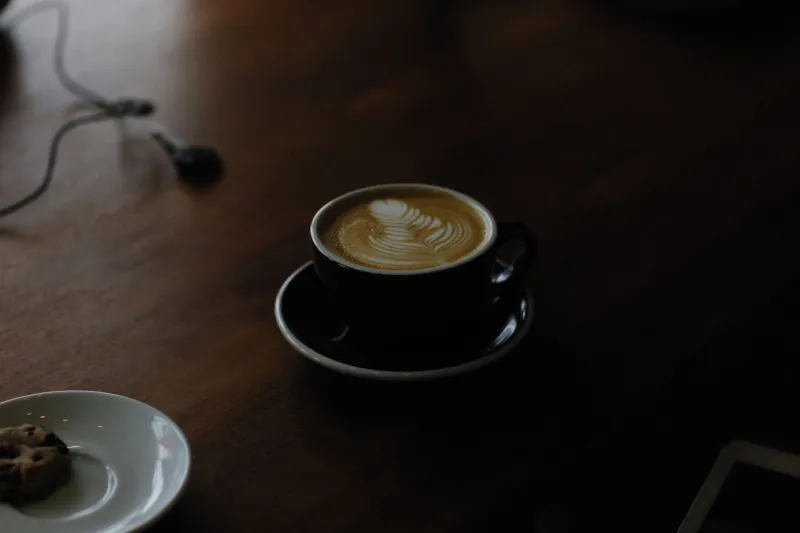
The Cup That Refuses to Be Rushed
Somewhere between your third Slack notification and your second reheated coffee, you might start to wonder if there's a better way to do this. In Prague, they've had an answer for generations — and it doesn't involve a productivity app or a standing desk.
It's called the coffee minute, though calling it a "minute" is almost a joke. Czech coffeehouse culture has long treated the act of sitting down with a single, carefully prepared cup as something worth protecting. Not a pitstop. Not a transaction. A pause that actually means something.
For American professionals drowning in back-to-back meetings and 12-tab browser sessions, that idea is starting to sound less like a charming European quirk and more like a lifeline.
What the Neuroscience Actually Says
Here's the thing — your brain isn't built for the pace most of us are keeping. Research in cognitive neuroscience has consistently shown that the human prefrontal cortex, the part responsible for decision-making, creativity, and emotional regulation, needs genuine downtime to function well. Not doom-scrolling downtime. Not eating lunch while answering emails downtime. Actual, unstructured rest.
Dr. Mary Helen Immordino-Yang, a neuroscientist at USC, has studied what happens when the brain is given space to simply be. Her work suggests that moments of quiet, inward-focused rest are essential for meaning-making and long-term wellbeing. Without them, we're essentially running a high-performance engine without ever letting it cool down.
A deliberate coffee break — the kind where your phone stays face-down and you actually taste what's in your cup — isn't indulgence. It's maintenance.
Specialty coffee, with its layers of flavor, its aroma, its texture, gives you something genuinely worth paying attention to. A well-pulled espresso from a quality single-origin bean isn't something you gulp. It invites you to slow down, almost by design.
Profiles in Pause: Americans Who've Made the Shift
Take Maya, a 34-year-old UX designer in Austin, Texas. Two years ago, she started what she calls her "Prague break" — a deliberate 20-minute window, mid-morning, where she walks to her neighborhood specialty café, orders a pour-over, and sits without her laptop.
"I felt guilty about it at first," she admits. "Like I was stealing time from work. But within a few weeks, I noticed I was coming back to my desk with actual ideas. Not just task-completion mode — real creative thinking."
Or consider James, a 41-year-old financial analyst in Chicago who started the habit after a work trip to Europe left him genuinely unsettled by how different his energy felt after a slow café morning. "In Prague, I sat in this old coffeehouse for almost an hour with one espresso and a glass of water. Nobody rushed me. I wasn't checking anything. I felt like a human being for the first time in months."
These aren't isolated anecdotes. Across Reddit threads, wellness forums, and workplace culture conversations, a quiet countermovement is forming — people actively reclaiming a single cup of coffee as a non-negotiable moment of stillness.
How Specialty Cafés Are Responding
Smart café owners are noticing the shift, and some are actively designing for it.
The old model — high turnover, fast transactions, plenty of outlets so people can hunker down and work for six hours — is giving way to something more intentional. Inspired in part by Central European coffeehouse traditions, a new wave of American specialty cafés is rethinking what it means to be a "third space."
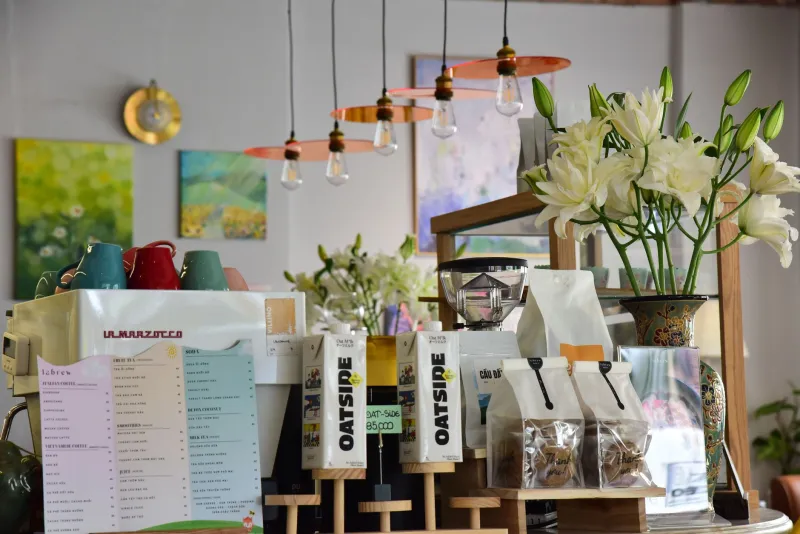
Think: fewer power outlets deliberately placed, which gently discourages marathon laptop sessions. Seating arrangements that prioritize small tables and window perches over communal work benches. Menus that reward exploration — seasonal single-origins, rotating brewing methods, thoughtful food pairings — rather than just defaulting to the same oat latte every time.
Some cafés are going even further. A handful of spots in cities like Portland, Nashville, and Brooklyn have introduced what they're calling "slow hours" — typically mid-morning windows where the music drops, service slows intentionally, and the whole atmosphere shifts toward something more contemplative. No announcements, no gimmicks. Just a quieter room that gives people permission to actually be there.
It's a philosophy that would feel right at home along the cobbled streets of Vinohrady or Malá Strana.
The Problem with the Power Hour
American productivity culture loves a framework. The Pomodoro Technique. Time-blocking. The 90-minute ultradian rhythm. We're not short on systems for structuring our work — but most of them treat rest as a tool for more output, not as something valuable in its own right.
The Prague coffee minute pushes back on that framing. It's not a strategy. It's not optimized. You're not doing it to be more productive afterward (even if you are). You're doing it because a good cup of coffee, in a good space, with a few minutes of genuine quiet, is worth having for its own sake.
That's a subtle but meaningful distinction. And it's one that American hustle culture has a genuinely hard time making.
"We've been sold this idea that every moment has to be justified by what it produces," says Maya. "But sitting with a good coffee and just... existing for a few minutes? That produces something too. It's just harder to put on a spreadsheet."
Making It Work in Your Day
You don't need to book a flight to the Czech Republic to try this. Here's how to bring a little of that Prague energy into your regular routine:
- Leave your phone in your pocket. Or better yet, leave it at your desk. The break only counts if you're actually present for it.
- Order something worth paying attention to. A well-made pour-over or a carefully pulled espresso gives you something to actually taste, not just consume.
- Pick a café that earns your lingering. Find a spot that feels like a destination, not a drive-through. Comfortable seating, good light, no pressure.
- Set a real boundary. Tell yourself this is 15 to 20 minutes that belong to the cup, not to your to-do list. Then actually mean it.
- Go at the same time each day. Ritual is the whole point. Consistency is what turns a one-off break into something that actually changes how you feel.
A Different Kind of Productivity
Prague didn't invent the idea of slowing down, but it did preserve something the rest of the world has been quietly losing — the belief that a cup of coffee deserves your full attention, and that giving it that attention is never a waste of time.
As American professionals keep searching for ways to feel less frayed, that belief is starting to travel. One purposeful pause at a time.