The Ritual in the Cup: How Prague's Meditative Coffee Tradition Is Resonating With Burned-Out Americans
For most Americans, coffee is a delivery mechanism. You need caffeine; the coffee provides it. The process — scoop, brew, pour, go — is something to get through, not something to experience. The cup is a means to an end, usually consumed in a car, at a desk, or while scrolling a phone with the other hand.
In Prague, that relationship with coffee looks almost unrecognizably different.
A Different Kind of Coffee Consciousness
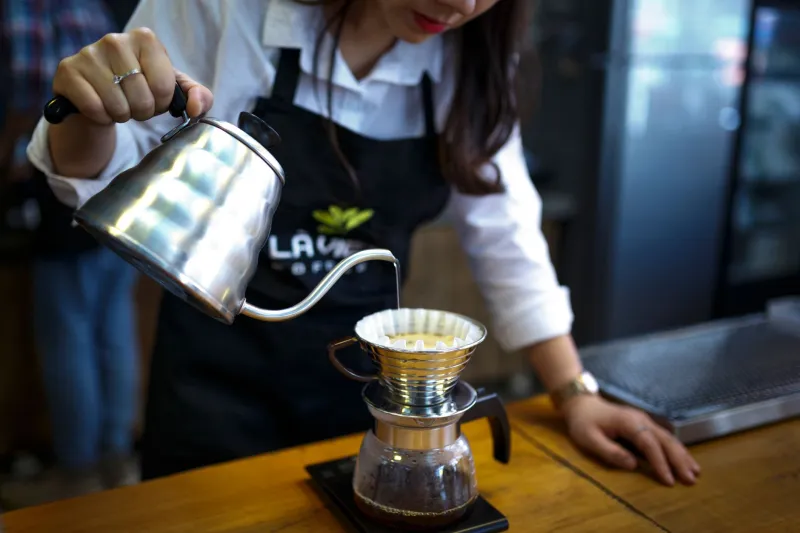
Walk into a serious specialty café in Prague's Vinohrady or Žižkov neighborhoods and you'll notice something almost immediately: the barista isn't rushing. The preparation of a single pour-over might take four or five unhurried minutes. The coffee, when it arrives, comes on a small wooden tray with a glass of still water. There's no lid. No sleeve. No suggestion that you should be anywhere else.
The expectation embedded in that presentation is subtle but unmistakable: pay attention. Smell it first. Let it cool slightly. Taste it as it changes temperature. This is not fuel. This is an experience with a beginning, a middle, and an end.
That philosophy — coffee as deliberate practice rather than habitual intake — has deep roots in Central European coffeehouse culture, where the act of sitting with a cup has always been treated as inherently valuable. And it's beginning to find real traction in the American wellness conversation.
What Neuroscience Says About Slowing Down
Dr. Priya Mehta, a cognitive neuroscientist at the University of Michigan who studies attention and sensory experience, isn't surprised that ritualized coffee preparation is resonating with people looking for mindfulness anchors.
"Repetitive, sensory-rich routines have a genuinely calming effect on the nervous system," she explains. "When you engage fully with a tactile, aromatic process — measuring, heating water to a precise temperature, watching a bloom, smelling the first pour — you're essentially practicing what we call 'attentional anchoring.' You're training your brain to be present in a low-stakes, pleasurable context."
This, Mehta notes, is functionally similar to what formal meditation practices aim to achieve, but with a much lower barrier to entry. You don't need a cushion or an app. You need a kettle, good beans, and the willingness to slow down for five minutes.
"The Czech tradition of treating coffee as a ceremony rather than a chore is, from a neuroscientific standpoint, genuinely good for you," she says. "It's not just romantic. It's practical."
American Café Owners Embracing the Slower Cup
Some US café entrepreneurs are building entire business models around this idea.
Sophia Crane opened Still Water Coffee in Denver two years ago with a specific mission: to create a space where the coffee preparation itself was part of what customers paid for. Every drink at Still Water is made using a manual method — no espresso machines, no automated grinders. Customers can watch the full process from the bar, and baristas are trained to narrate what they're doing if someone seems curious.
"I'd spent time in Prague and Budapest and I was struck by how the preparation was almost theatrical in the best way," Crane says. "Not performative — intentional. The barista was fully present. The customer was fully present. It felt like a shared moment rather than a transaction."
Still Water's menu includes a "slow flight" — three small pour-overs of the same single-origin bean, brewed at slightly different water temperatures, served sequentially so customers can taste how extraction changes the cup. It's the kind of thing that sounds niche but has become one of the shop's most popular offerings.
"People come in stressed and leave genuinely calmer," Crane says. "I'm not claiming coffee is therapy. But intentional sensory experience is real, and people are hungry for it."
The Wellness Angle That Isn't Gimmicky
The American wellness industry has a complicated relationship with authenticity. Mindfulness has been commodified to the point of self-parody — there are apps, supplements, and branded water bottles all competing for the same anxious consumer. Into this landscape, the idea of "mindful coffee" could easily tip into eye-rolling territory.
But meditation teacher and author Leon Whitfield, who leads workshops on everyday contemplative practice in New York, thinks the coffee ritual angle is actually one of the more honest entries in the mindfulness conversation.
"What I appreciate about the Czech coffeehouse model is that it doesn't ask you to believe anything or buy anything special," Whitfield says. "It just asks you to pay attention to something you're already doing. That's the whole game with mindfulness — finding the ordinary moments and inhabiting them fully."
Whitfield has started incorporating a simple coffee preparation exercise into his workshops — a slow, silent pour-over made by participants themselves — as a way of demonstrating attentional presence without the loaded vocabulary of meditation.
"People get it immediately when they do it with coffee," he says. "The smell is so vivid, the sounds are so specific. It's a very easy doorway into the present moment."
What Gets Lost When Coffee Becomes Fuel
There's a subtle cost to treating coffee purely as a stimulant delivery system, and it goes beyond the missed sensory pleasure. When we automate or rush our rituals — whatever they are — we lose the micro-moments of intentionality that, accumulated over time, contribute meaningfully to a sense of a life being lived rather than just processed.
Prague's coffeehouse culture understood this intuitively for generations before "mindfulness" became a wellness industry keyword. The long sit with a single cup wasn't laziness or inefficiency. It was a cultural assertion that some things deserve your full attention.
For Americans navigating a productivity culture that glorifies speed and multitasking, that assertion carries a quiet kind of radical energy. The invitation isn't to abandon ambition. It's just to make the coffee, smell the coffee, and drink the coffee — one thing at a time.
As it turns out, that might be exactly what a lot of us need.