Stay Awhile: How Prague's 'Coffee as Conversation' Tradition Is Quietly Challenging America's Grab-and-Go Culture
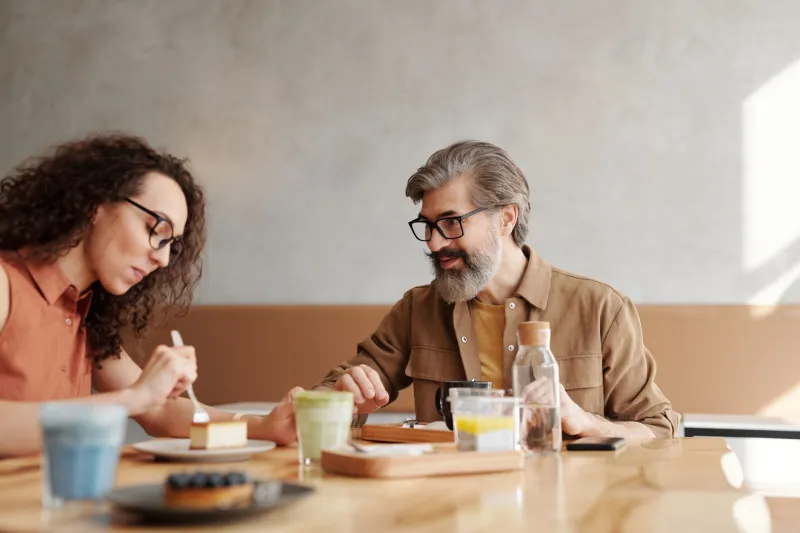
There's a particular kind of afternoon in Prague that anyone who's visited will recognize. You duck into a coffeehouse — maybe one of the grand, chandelier-lit rooms near Wenceslas Square, or a quieter neighborhood spot tucked behind a tram stop — and you order a small, precise cup of coffee. The server brings it without rushing you. Nobody hovers. Nobody wipes down the table next to you as a hint. Hours pass. The cup gets refilled, or maybe it doesn't, and somehow that's completely fine too.
This is the Czech coffeehouse ritual in its purest form: coffee not as a transaction, but as a reason to be somewhere. And increasingly, American café owners are asking themselves a pointed question — why can't we have that?
The Problem With 'Fast' Coffee
Let's be honest about how most US coffee shops operate. You walk in, you order at a counter, your name gets called in three minutes, and the ambient pressure to free up your table starts almost immediately. The chairs are often designed to be mildly uncomfortable on purpose. The music is just loud enough to discourage long conversations. Turnover is the goal.
This model works financially, at least in the short term. But a growing segment of American coffee drinkers — particularly millennials and Gen Z consumers who came of age watching European café culture glamorized in travel content — are starting to push back. They don't just want good coffee. They want somewhere to actually be.
According to a 2023 report from the Specialty Coffee Association, "experiential" coffee consumption is one of the fastest-growing segments in the US market. People are willing to pay more, and stay longer, if the environment genuinely supports it. That shift is creating space for a different kind of café to exist.
What American Cafés Are Actually Borrowing
A handful of specialty coffee shops across the country have started making deliberate, structural changes inspired — sometimes explicitly — by Central European coffeehouse traditions.
In Portland, Oregon, a café called Threshold redesigned its entire floor plan after the owner spent three months traveling through Prague and Vienna. Gone are the bar-height communal tables optimized for laptop workers. In their place: mismatched armchairs, low tables, and a no-laptop policy during weekend afternoons. "We wanted people to look at each other," the owner told a local food publication. "That sounds almost radical now, but it's just how coffeehouses used to work."
In Chicago's Logan Square neighborhood, a specialty roaster called Slow Meridian built its service model around what they call "the unhurried cup." Servers bring water alongside every coffee order — a nod to the Austrian and Czech tradition — and the menu is intentionally short, designed to reduce decision fatigue and keep the focus on the experience of being there rather than the performance of choosing.
Even in New York City, where real estate economics make lingering feel almost transgressive, a few cafés in Brooklyn and the Lower East Side have started offering what they call "table memberships" — a monthly fee that gives regulars a reserved spot for a set number of hours each week. It's a creative workaround that lets the café generate predictable revenue while giving customers genuine permission to settle in.
The Pricing Conversation Nobody Wants to Have
Here's where things get complicated. The Prague coffeehouse model only works because it's priced accordingly. In Czech coffeehouses, a single espresso might cost the equivalent of two or three dollars — but the cultural understanding is that you're not just buying the drink. You're renting a warm, beautiful room with attentive service for as long as you need it. The value exchange is honest.
In the US, that conversation is harder. Specialty coffee already faces consumer resistance around pricing, with many customers balking at six or seven dollars for a well-made pour-over. Asking those same customers to reframe that price as an experience rather than a product requires a real shift in how cafés communicate their value.
Some shops are getting creative. Slow Meridian in Chicago charges a small "table fee" on weekends — just two dollars, collected automatically — that covers the cost of still and sparkling water service throughout a customer's visit. Framed as a hospitality gesture rather than a cover charge, it's been received surprisingly well. "Once people understand what they're getting," a manager explained, "they actually feel better about staying longer, not worse."
Ambiance as Intentional Design
The physical environment matters enormously here, and Prague's coffeehouses have centuries of accumulated wisdom on the subject. The best ones feel like living rooms that happen to serve excellent coffee — slightly worn in places, layered with books and art and the evidence of long use, lit warmly enough that time becomes pleasantly elastic.
American cafés chasing this feeling are learning that it can't be faked with exposed brick and Edison bulbs alone. It requires actual intention: acoustics that absorb rather than amplify noise, seating that invites you to shift positions over the course of two hours, staff who are trained to read the room rather than clear it.
At Threshold in Portland, the staff goes through what the owner calls "hospitality calibration" — essentially learning to distinguish between a customer who wants attentive service and one who wants to be left entirely alone. "In Prague, the servers just know," she said. "We're trying to build that instinct here."
Why This Moment Makes Sense
There's something almost poignant about the timing of this movement. It's emerging in a post-pandemic landscape where many Americans are acutely aware of what they missed during years of isolation — not just social interaction, but the specific pleasure of lingering in a public space with no particular agenda. The coffeehouse as a third place, somewhere between home and work, has never felt more necessary.
Prague's café culture understood this intuitively for generations. The great Central European coffeehouses of the early 20th century were where writers wrote, philosophers argued, and ordinary people processed the texture of their days. The coffee was almost beside the point — excellent, certainly, but secondary to the permission the space granted you to simply exist in it for a while.
American specialty coffee has spent the last two decades perfecting the cup. The next frontier, it seems, is perfecting the room.
And if a few more US cafés decide to pull their chairs a little closer together, turn the music down a notch, and stop eyeing the clock — well, Prague would probably approve.