Sipping Like a Local: The Forgotten Prague Coffee Orders Americans Are Now Obsessed With
I still remember the moment I realized I had no idea what I was doing.
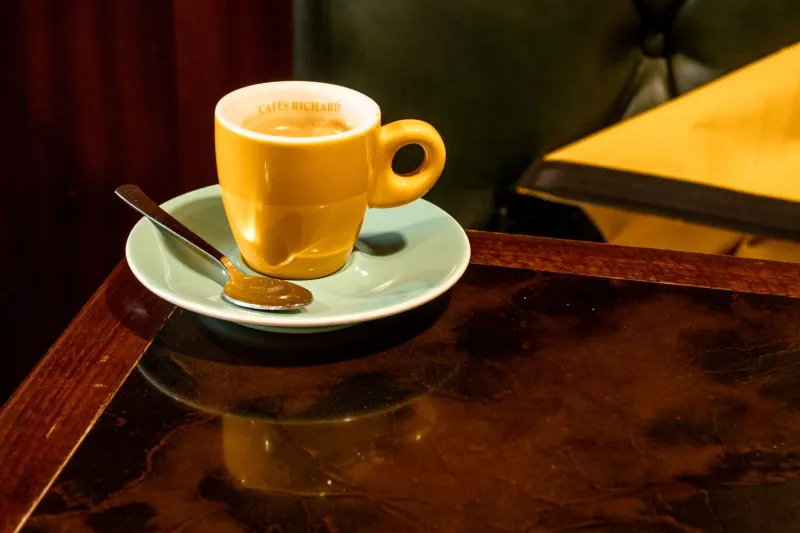
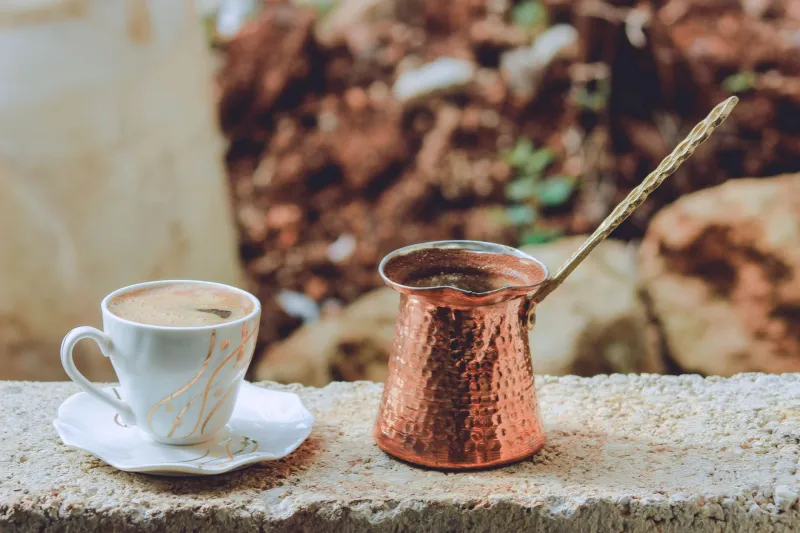
I was standing at the marble counter of a low-lit café just off Náměstí Míru, Prague's quieter residential square, staring at a handwritten chalkboard menu. My Czech was nonexistent. My confidence was fading fast. I pointed at something that sounded vaguely familiar, and what arrived a few minutes later was a small copper pot, a glass of water, and a tiny cup filled with something thick, dark, and impossibly fragrant.
It wasn't espresso. It wasn't drip coffee. It was something older, something with a story — and it completely rewired the way I think about what a cup of coffee can be.
That drink was turecká káva, and if you haven't heard of it yet, you're about to.
What Exactly Is Turecká Káva?
Translated literally as "Turkish coffee," turecká káva is a brewing method that predates the espresso machine by centuries. Finely ground coffee — and we're talking almost powdery fine — is combined with cold water directly in a long-handled copper or brass pot called a džezva (or cezve in Turkish). The mixture is slowly heated over low flame or hot sand until it foams, then pulled back just before boiling. This process is sometimes repeated two or three times to build a thick, velvety layer of foam on top.
The result lands in your cup unfiltered. The grounds settle at the bottom over a minute or two, and you sip slowly — carefully — savoring the liquid from the top down. You do not stir. You do not rush. You absolutely do not chug it on the way to a meeting.
In Prague, this drink carries the weight of Ottoman-era coffeehouse culture that swept through Central Europe in the 17th century. Czech coffeehouses adopted it enthusiastically, folding it into their own traditions of lingering, reading, and philosophical debate. It became less of a caffeine delivery system and more of an anchor for a slower, more intentional kind of afternoon.
Flavor-wise, turecká káva is intense and slightly bitter with a silky body that's unlike anything a drip machine produces. Many Prague cafés add a pinch of cardamom to the grounds — a nod to its Middle Eastern roots — which gives the cup a warm, almost floral spice note that lingers beautifully.
The Glass of Water Is Not an Afterthought
Here's something that trips up first-timers: when your turecká káva arrives, it almost always comes alongside a small glass of still water. In American café culture, we tend to treat the water as a courtesy, something to wash down a too-hot sip. In Prague, it's part of the ritual.
You sip the water first to cleanse your palate. Then you let the coffee sit for a moment — one full minute, ideally — to allow the grounds to settle. Then you drink slowly, alternating between coffee and water to keep your senses sharp and your palate clean. It sounds fussy until you try it, and then it just feels right.
This intentional pacing is a big part of why Americans who stumble into this ritual tend to fall hard for it. We're so conditioned to optimize our coffee intake that slowing down and actually tasting feels almost radical.
Other Prague Orders Worth Knowing
Turecká káva gets the most attention, but it's not the only uniquely Czech café experience worth seeking out.
Vídeňská káva — or Viennese coffee — is another staple of Prague café menus that has no clean American equivalent. It's a strong, double-shot espresso served in a tall glass and topped with a generous cloud of lightly sweetened whipped cream. Not foam. Not milk. Real, hand-whipped cream. You don't stir it in; you let it melt slowly into the coffee below, transforming each sip as you drink down through the layers. It's indulgent in the best possible way.
Then there's překapávaná káva, which is essentially a slow-drip filter coffee — but the way Prague cafés treat it elevates it well beyond what you'd find in a standard American diner. Served in a proper ceramic cup with a side of something sweet (often a thin wafer or a square of dark chocolate), it's positioned as a moment, not a means to an end.
And if you really want to go deep, look for ledová káva in the warmer months — a chilled coffee drink made with cold brew or cooled espresso, topped with a scoop of vanilla ice cream and a dollop of whipped cream. It sits somewhere between a dessert and a beverage and is absolutely worth every calorie.
Where to Find These Drinks in the US
The good news is that Central European café culture is quietly gaining traction in American specialty coffee circles. You just have to know where to look.
In New York City, a handful of Eastern European-owned cafés in Astoria and the East Village have begun offering turecká káva on their menus, often prepared tableside with the džezva and the full water-glass ritual intact. Ask for it specifically — it's not always listed prominently.
In Chicago, the Pilsen and Ukrainian Village neighborhoods have longstanding Central European communities, and some of the café spots there are leaning into their heritage in ways that feel genuinely exciting for coffee lovers.
Los Angeles has seen a wave of specialty coffee shops experimenting with global brewing methods, and a few spots in Silver Lake and Los Feliz now offer džezva-brewed coffee as part of their rotating menu.
If you can't find a café near you that does it well, turecká káva is surprisingly easy to recreate at home. You'll need:
- Extra-fine ground coffee (ask your local roaster to grind it for Turkish brewing, or use a burr grinder on its finest setting)
- A džezva or small saucepan
- Cold filtered water
- A pinch of cardamom (optional but highly recommended)
- Patience
Combine one heaping teaspoon of coffee per small cup of cold water in your džezva. Heat slowly over low flame, watching for the foam to rise. Pull it just before it boils. Let it rest in your cup for sixty seconds. Then sip.
Why This Moment Matters
There's something quietly subversive about a coffee order that demands you slow down. In a culture built around efficiency and productivity, choosing turecká káva is almost a small act of rebellion — a decision to treat fifteen minutes as your own, to taste something fully, to let the grounds settle before you drink.
That's the spirit that drives everything we celebrate here at Café Fin v Praze. Prague's coffeehouse culture didn't survive centuries because it was fast or convenient. It survived because it was worth it — the flavors, the ritual, the unhurried sense of being exactly where you're supposed to be.
So the next time you're standing at a café counter feeling adventurous, skip the usual order. Ask for something you've never tried. Let it arrive on its own terms. And give it a full minute before you take that first sip.
Trust me — it's worth the wait.