The Slow Cup Revolution: How Central European Coffeehouse Rituals Are Changing the Way Americans Drink Coffee
Walk into almost any American coffee shop on a Tuesday morning and you'll witness the same choreography: a rapid-fire order at the counter, a name scrawled on a cup, and a customer practically sprinting back out the door before the foam has even settled. We've built an entire coffee culture around efficiency. Get in, get caffeinated, get moving.
But something is shifting — slowly, almost imperceptibly — in specialty cafés from Portland to Philadelphia. A different kind of coffee experience is taking root, one that owes less to the Italian espresso bar or the Scandinavian third-wave roastery and more to the grand, unhurried coffeehouses of Central Europe. Specifically, Prague.
A City That Never Rushed Its Coffee
Prague's café tradition stretches back to the late 17th century, when coffeehouses first appeared in Bohemia as gathering places for merchants, intellectuals, and artists. By the 19th and early 20th centuries, establishments like Café Slavia and Café Louvre had become living rooms for the city's literary and political elite. Franz Kafka was a regular. Václav Havel held court over espresso and conversation. These weren't places you visited for a quick pick-me-up — they were destinations in themselves, spaces where time was meant to be spent, not saved.
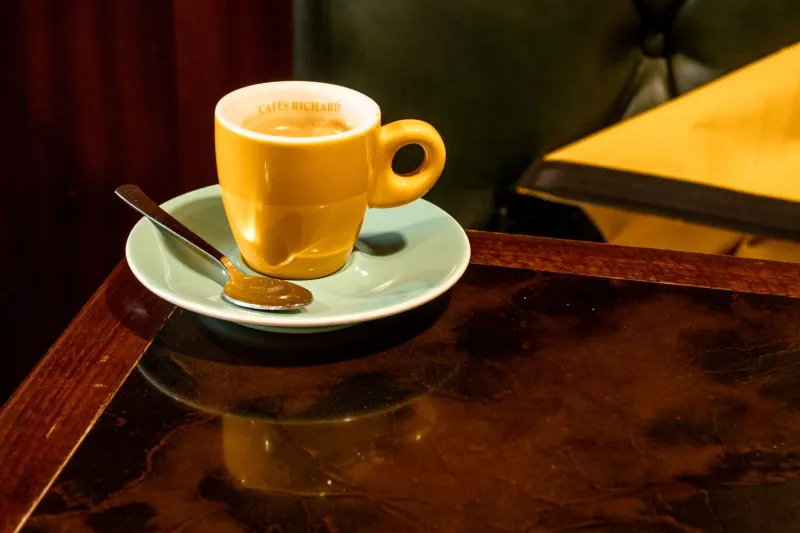
The Czech concept of posezení — loosely translated as "a good sit" — is baked into the culture. You order your coffee, you settle in, and nobody rushes you. A single Viennese-style melange (espresso topped with steamed milk and a dollop of foam) might anchor an entire afternoon of reading, writing, or simply watching the city move outside the window. The beverage is almost secondary to the experience of being there.
That philosophy is starting to resonate deeply with American coffee drinkers who are increasingly burned out on the grab-and-go model.
The Third Wave Meets the Old World
"There's a growing segment of our customers who don't want to feel like they're moving through a drive-through," says Marcus Heller, owner of a specialty café in Chicago's Logan Square neighborhood who spent two years living in Prague before opening his shop. "When I was there, I'd go to a café and stay for three hours with one coffee and nobody batted an eye. I wanted to bring that permission back home with me."
Heller's café features long communal tables, no Wi-Fi password prompts after 30 minutes, and a menu that deliberately slows the ordering process — pour-overs prepared tableside, Turkish-style coffees served with a small glass of water (a classic Czech and broader Central European custom signaling that the experience is meant to be savored). He credits the Czech coffeehouse tradition as the direct inspiration.
He's not alone. In cities like Denver, Brooklyn, and Seattle, a handful of specialty café owners are consciously designing spaces and service models that borrow from that Central European template. Longer brew times, intentional café layouts that discourage laptop-and-leave behavior, and menus that pair coffee with thoughtfully chosen foods are all hallmarks of this emerging trend.
The Literary Salon as a Business Model
One of the most distinctive features of Prague's historic coffeehouses was their role as cultural venues. Poetry readings, chess matches, political debates — the café was a stage as much as a restaurant. American cafés have long dabbled in open mic nights and local art displays, but the Czech model goes deeper. The atmosphere itself was curated to encourage intellectual and creative engagement.
Some US café owners are leaning into exactly that. "We host a monthly 'slow coffee' morning where we dim the lights, play ambient music, and encourage people to bring books or journals," says Priya Desai, a barista and co-owner of a specialty shop in Austin, Texas. "We got the idea from reading about the old Prague café culture. The response has been incredible — people are genuinely hungry for that kind of intentional space."
Desai also notes that her customers are asking more questions about where their coffee comes from, how it's brewed, and what makes one preparation method different from another — a curiosity that mirrors the informed, engaged café-goer of Prague's golden coffeehouse era.
Mindfulness in a Mug
The timing of this cultural crossover isn't accidental. Post-pandemic America has developed a complicated relationship with busyness. After years of forced slowness, many people discovered — sometimes reluctantly — that they actually liked having time to sit with their thoughts. The wellness industry's obsession with mindfulness has found an unexpected ally in the specialty coffee world.
Prague's coffeehouse tradition offers a ready-made framework for that mindful approach. The deliberate preparation of a hand-brewed coffee, the ritual of warming your hands around a ceramic cup, the act of choosing a corner seat and staying put — these aren't just romantic notions. They're practices that reduce cortisol, encourage presence, and make the coffee itself taste better because you're actually paying attention to it.
"Mindful drinking is a real thing," says Heller. "When you slow down and actually taste your coffee instead of inhaling it on the way to a meeting, you notice things. The acidity, the sweetness, the finish. That's what specialty coffee is supposed to be about."
What This Means for Your Next Café Visit
You don't have to book a flight to Prague to tap into this tradition. The next time you visit a specialty café, try ordering something that requires a little patience — a pour-over, a siphon brew, or a properly pulled espresso. Ask the barista about the origin of the beans. Find a seat that isn't directly in front of the door. Leave your phone in your pocket for the first ten minutes.
Better yet, seek out one of the growing number of US cafés that are consciously channeling Central European hospitality — the ones where the furniture is a little too comfortable to abandon quickly, where the music is low enough for conversation, and where the staff seems genuinely pleased when you decide to stay a while.
Prague built its café culture over centuries. America is just getting started. But if the early signals are any indication, the slow cup is finally having its moment — and honestly, it's worth waiting for.